
Blog
Autumn Trip: The legendary train to Banská Štiavnica
10/18/2026· Updated 10/20/2026
Discover the mining underground and unique water reservoirs upon arrival in this historic mining town. Practical tips for family trips, hiking, and exploring the Štiavnica Mountains.
October in the Štiavnica Mountains transforms the forests into a golden palette of colors, and the morning mists over the 'tajchy' reservoirs create an unforgettable backdrop. This is a time when the bustle of the summer season fades, and the historic streets of Banská Štiavnica breathe with a calmer, almost melancholic atmosphere. If you want to avoid parking in the steep, narrow, and often crowded streets of the town, take the legendary local train, which locals call 'Štiavnická Anča'. Riding this train through the mountain landscape is not just a simple transfer from point A to point B, but an authentic experience that defines the region's character and prepares you for stepping into another century.
The Story of the Youth Railway
Railway line number 154, known as the Youth Railway, connects the express rail hub of Hronská Dúbrava with isolated Banská Štiavnica. The original narrow-gauge railway from 1873, used primarily for transporting extracted minerals and timber, could no longer keep up with the demands of the developing industry after World War II. The current standard-gauge track was built between 1948 and 1949, thanks to the enormous efforts of over 47,000 volunteers from across the then Czechoslovakia and abroad.
The challenging, steeply rising terrain of the Kozelník Valley demanded true engineering mastery. During construction, workers and engineers had to plan and implement the building of several massive bridges, arched viaducts, and, above all, the Banská Belá tunnel, which is nearly 1.2 kilometers long. The construction took place under harsh conditions, often with nothing more than basic tools. Today, this 20-kilometer route is rightfully praised as one of the most beautiful mountain railways in Slovakia. The train winds slowly along the Jasenica stream, passes through deep rock cuts, and offers passengers incomparable views of the dense mixed forests, which in October display all shades of yellow, orange, and red.
Practical Trip Information
The motor train journey from Hronská Dúbrava to Banská Štiavnica takes approximately 30 minutes. During this short trip, the train overcomes a significant elevation gain and stops in the picturesque villages of Kozelník, Banská Belá, and Banský Studenec. For guests staying in nearby accommodation, it is most practical to drive to the Hronská Dúbrava train station. You can park safely and free of charge in designated areas right in front of the station building, which is a huge advantage compared to the complicated parking situation in the center of Banská Štiavnica.
Tickets are available directly from the conductor on the train (if you board at a station without a ticket office) or very conveniently online via the ZSSK mobile app. A one-way ticket for an adult costs around €1.50, making this journey not only romantic but also extremely economical. I recommend keeping a close eye on the current train schedule, especially outside the main summer season, when service intervals can be less frequent, typically every two hours. On weekends, connections are often adapted to the arrivals of express trains from Bratislava and Košice.
Arriving in Town and First Steps
After arriving at the final station in Banská Štiavnica, you are about 2.5 kilometers away from Trinity Square (Námestie svätej Trojice), the heart of the town. The walk takes 35 to 40 minutes at a leisurely pace and leads along the long Kammerhofská Street, which lines the entire historic core and gradually climbs uphill. This walk itself is an excursion into history.
On the way, you certainly won't miss the Kammerhof, the largest building complex in the town. From the 18th century, this seat of the former Chief Chamber Count's Office managed mining, metallurgy, and minting across the entire former Kingdom of Hungary. Today, it houses an exhibition that maps the history of mining technology and the work of the famous Mining Academy in detail. If you want to avoid walking uphill, especially when traveling with small children, local taxis are usually waiting right in front of the station building. The fare from the station to the historic center is between 4 and 5 euros and takes less than ten minutes. Local public transport is also available, with a stop just a few dozen meters from the train platform.
Autumn Coffee and the 'Trotuár'
October in Banská Štiavnica brings an indescribable peace to the streets. The summer crowds of tourists are gone, restaurant terraces shrink, and you can undisturbed enjoy select coffee in local roasteries. The center of café life is the so-called 'Trotuár'. This is a historic, architecturally unique elevated sidewalk that lines the main street and in the past served as a promenade for the Štiavnica elite and Mining Academy students.
Sitting here with a hot drink, watching the fog rolling over the roofs of burgher houses, and admiring the facades is an ideal start to the day. Many establishments also offer local cakes and breakfast menus that will boost your energy before more demanding climbs into the surrounding hills.
The Unique Banská Štiavnica Calvary
After your morning espresso and getting acclimated to the town, I recommend choosing a moderate hike and a walk to the most striking landmark of the wider area – the Banská Štiavnica Calvary. This magnificent Baroque complex from 1744–1751 was built at the initiative of Jesuit Father František Perger. Thanks to a recent extensive reconstruction, the complex was saved from decay and today is one of Europe's most beautiful treasures.
The Calvary consists of 22 chapels, three churches, and a Holy Sepulchre, all sensitively embedded in the steep slope of the Scharfenberg volcanic hill. The climb to the Upper Church from the town center takes about 45 minutes. The route leads up through the streets and then onto the winding paths of the Calvary itself. In autumn months, when the sun is lower on the horizon, the top of the hill offers exceptional panoramic views of the entire town and the surrounding mountains.
When planning this trip, pay attention to practical details. Don't forget to wear sturdy and comfortable shoes. Grassy surfaces and stone steps can be extremely slippery and dangerous after the morning autumn dew. If you decide to go to the Calvary by car, there is a small parking lot under the hill, but it fills up quickly, so a walk from the center is always a better choice.
A Family Trip to the Underground
If you are traveling with family and children, Banská Štiavnica offers a wealth of interactive experiences. Head straight to the Slovak Mining Museum (Open-Air Museum), which is the oldest and most extensive mining exhibition of its kind in Slovakia. It is located about 1.5 kilometers from the town center towards the village of Štiavnické Bane, in a picturesque valley below the Klinger reservoir.

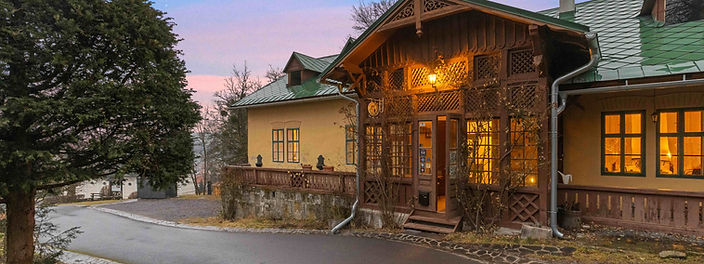
Soví dom
Stay right here with us
Svätý Anton Manor and Banská Štiavnica are within easy reach of Soví dom. Choose an apartment or the whole house for yourself.
View accommodationThe museum presents the hard work of miners from the Middle Ages to the 20th century in an engaging way. The biggest attraction is the descent into the underground. The tour of the historic Bartolomej adit, which is the highlight of the program, takes about 90 minutes. The preparation itself is an extremely strong experience for children – before entering, every visitor is issued a traditional cloak, a protective helmet, and a mining lamp.
Specific conditions prevail underground; a constant temperature of around 8 °C and high humidity are maintained all year round. It is essential to pack warmer clothing, hoodies, and waterproof shoes, even on warmer autumn days, as mud and water are often found on the ground. Admission for an adult visitor is 10 euros, while a discounted family ticket costs 25 euros. You will learn not only about methods of tunneling but also see historic mining equipment and draft horses that spent entire years underground in the past.
After emerging from the underground and returning to the historic core, you will surely be hungry. There are several excellent restaurants on Trinity Square and in the adjacent streets. In the autumn season, I definitely recommend tasting seasonal game specialties, roast duck with potato pancakes ('lokše'), or thick mushroom soup made from porcini mushrooms gathered directly in the surrounding forests.
Active Tourists and Sweeping Views
Banská Štiavnica does not lie only in a valley; it is literally surrounded by hills, making it an excellent starting point for medium-difficulty hiking. For more active visitors, I recommend setting out from the center of town along the red hiking trail to the Červená studňa saddle. This is an important crossroads of hiking trails and also a place with one of the highest-situated reservoirs ('tajchy').
From the saddle, you can smoothly continue along the ridge of the Štiavnica Mountains. The route leading through the hills of Paradajs and Tanád, both towering at a respectable 939 meters above sea level, will take two to three hours at an average pace. The elevation gain is not extremely difficult, and the trail is well-maintained. The reward for your effort is breathtaking panoramic views not only of the town itself nestled in the basin but also of dozens of shimmering surfaces of surrounding reservoirs. With good visibility, you can see as far as the Low Tatras or the Hungarian hills.
If you have more time and prefer technical monuments in nature, be sure to visit the Rozgrund reservoir. In its time, this water miracle was considered the most daring water structure in the world. It features an extremely steep earth dam, the technical solution for which was designed by the brilliant engineer Samuel Mikovíni. Since Rozgrund serves as a drinking water reservoir for the town, swimming in it is strictly forbidden. However, you will enjoy the peace all the more. A walk along its shores, lined with old trees, is quiet and meditative, ideal for an autumn rest.
The Phenomenon of Reservoirs and Mining Ditches
The Štiavnica Mountains are interwoven with a unique water management system that has no equal in Central Europe. Due to the lack of natural watercourses, mining engineers had to invent a way in the 18th century to power pumps and mining machinery. The result is a system of sixty artificial water reservoirs – 'tajchy' – connected by dozens of kilometers of collecting ditches.
Today, about half of the reservoirs have been preserved. In addition to the aforementioned Rozgrund, the Klinger reservoir, to which a romantic path leads through the forest directly from the town, or Veľká Vodárenská, known for its atypical turquoise water color, are worth a visit. Autumn walks along the former mining ditches, which today serve as contour hiking and cycling trails, are physically undemanding because they lead almost on the flat, and yet they take you through the deepest corners of the Štiavnica forests.
Return and Evening in a Historic Setting
Autumn days are relentlessly short, and the sun sets as early as five o'clock in the afternoon in October. Temperatures in the valleys drop quickly after sunset, so it is good to have a return plan ready. On the way back to Hronská Dúbrava, which is 25 minutes from Banská Štiavnica by train, enjoy the last rays of the sun illuminating stone viaducts and dense forests from the warmth of the carriage.
Soví dom
Stay right here with us
Svätý Anton Manor and Banská Štiavnica are within easy reach of Soví dom. Choose an apartment or the whole house for yourself.
View accommodationAfter a long day full of exploring the underground, hiking in the hills, and discovering history, you will appreciate quality rest. An excellent choice is accommodation near the manor house in Svätý Anton. This location offers an incredibly quiet and relaxing contrast to the tourist-busy center of Banská Štiavnica, while retaining its own historic nobility and immediate proximity to nature.
Are you planning a Štiavnica trip combined with a stay? Send us a non-binding inquiry with your preferred dates, and we will be happy to help you with your travel planning.
Sources
-
History of the Youth Railway on Wikipedia — verified 18 Oct 2026
-
Official website of the Slovak Mining Museum — verified 18 Oct 2026
-
Information about the renovation and access to the Banská Štiavnica Calvary — verified 18 Oct 2026
-
Mining and history exhibition Kammerhof — verified 18 Oct 2026
-
Tourist information about the Rozgrund reservoir — verified 18 Oct 2026
Related articles


Open-Air Mining Museum: A Practical Guide to the Mining Skansen
Discover the Open-Air Mining Museum in Banská Štiavnica. Planning a trip to Svätý Anton? Enquire about accommodation at Soví dom via our form.
View
ERB Brewery Banská Štiavnica: Craft Beer and Gastronomy
Visit the ERB brewery in Banská Štiavnica, housed in a historic building, offering its own beer production and gastronomy. Get an overview of the menu and history.
View
Glanzenberg Underground: A Trip Tip from Your Accommodation in Banská Štiavnica
Find out essential information about opening hours, prices, and safety in the Banská Štiavnica mining tunnels before leaving your accommodation.
View